



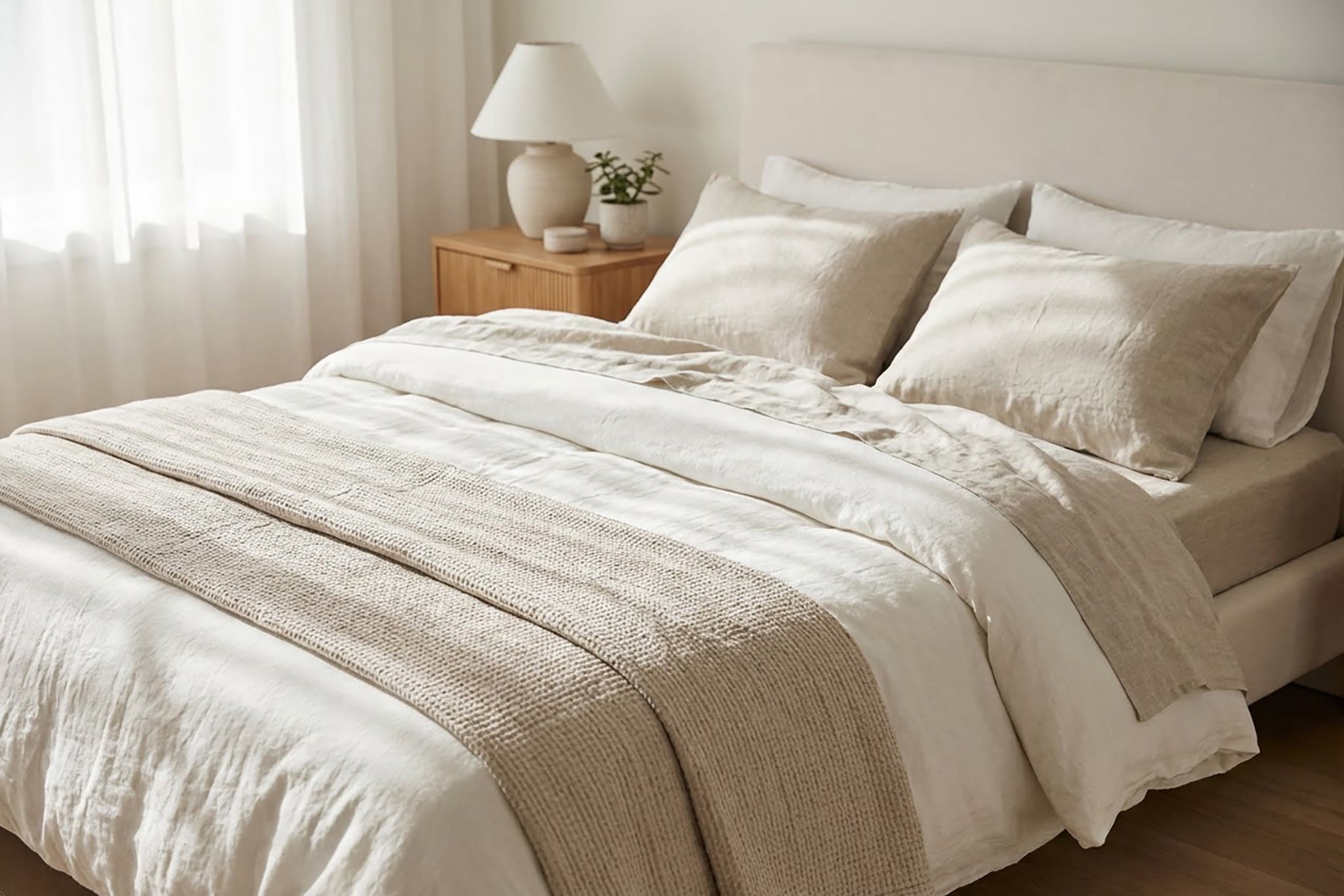
You've searched "what is a duvet" at least once. Probably while standing in a shop, pretending you already knew.
Duvet. Comforter. Coverlet. Quilt. Sham. The bedding world uses these words as if everyone learned them in school — but nobody did. And the confusion isn't harmless: it leads to spending money on layers you don't need, or missing the one layer that would actually make your bed feel finished.
The short answer: a duvet is a soft, filled insert — down, feathers, or synthetic — that you slip inside a removable cover and use as your main bed blanket. But that's just one term in a bedding vocabulary that includes comforters, coverlets, shams, and weaves that sound alike but feel completely different.
The fix is simpler than you'd think. Each term describes a specific thing with a specific job. Once you know what's what, choosing bedding stops feeling like guesswork and starts feeling like styling.
This is the glossary you'll bookmark. Every major bedding term, explained in plain language — what it is, what it looks like, and whether you actually need one.
What Is a Duvet?
A duvet is a soft, flat bag filled with down, feathers, or synthetic fibres. It's designed to be used inside a removable cover — much like a pillow inside a pillowcase. The duvet itself is the insert (sometimes called a duvet insert); the duvet cover is what you see, touch, and wash.
This two-piece system is the whole point. You swap covers to change the look of your bed without replacing the filling. A linen duvet cover in summer, a heavier cotton sateen one in winter — same insert, completely different feel. According to the Sleep Foundation, duvets originated in Europe and remain the standard bedding system across the UK, Scandinavia, and much of the continent, where the concept of a "top sheet" barely exists.
A duvet is typically filled with one of three materials: goose or duck down (lightest and warmest), a down-alternative polyester (hypoallergenic and easier to wash), or wool (naturally temperature-regulating). The fill is measured in "tog" in the UK and Europe — a 4.5 tog duvet suits summer, while 10.5–13.5 tog works for winter. Most year-round duvets sit around 7–9 tog.
Do you need one? If you want a bed that's easy to restyle and simple to care for, yes. A duvet-and-cover setup is the most versatile foundation for any bed — and it pairs beautifully with layered bedding for that styled, inviting look.
Duvet vs Comforter: The Difference That Actually Matters
A comforter is a one-piece quilted blanket — pre-filled and stitched so the filling stays evenly distributed. Unlike a duvet, it doesn't need a separate cover. You use it as-is, straight on the bed.
The practical difference comes down to washing and styling. Because a comforter is a single unit, you wash the whole thing — which usually means a trip to the launderette, since most home machines can't handle the bulk. A duvet cover, by contrast, slips off and goes in your regular wash. For anyone who values a low-maintenance bed, that distinction matters more than the filling inside.
Comforters are more common in North America; duvets dominate in Europe, the UK, and increasingly in design-conscious homes worldwide. Neither is objectively better — but if you like changing your bedroom's look with the seasons, a duvet gives you that flexibility without buying a whole new blanket each time.
What Is a Coverlet?
A coverlet is a lightweight, single-layer bedcover — thinner than a quilt, lighter than a comforter, and usually woven or lightly quilted with a clean, flat finish. It drapes over the mattress but doesn't typically reach the floor.
Think of a coverlet as the "finishing layer" of a well-made bed. It sits on top of your sheets (or over a duvet) and adds texture without bulk. In warmer months, many people use a coverlet on its own in place of heavier bedding.
Do you need one? If you're going for a layered, styled bed — the kind you see in interiors magazines — a coverlet folded at the foot of the bed or draped across the middle adds that effortless depth. It's also genuinely useful as a lightweight blanket for warm sleepers.
What's the Difference Between a Quilt and a Coverlet?
People use these interchangeably, but they're built differently. A quilt has three layers — a woven top, a middle layer of batting (padding), and a woven back — all stitched together, often in decorative patterns. A coverlet is typically a single woven layer, sometimes with light quilting on the surface but without the thick batting inside.
The result: quilts are warmer and heavier. Coverlets are thinner and more decorative. A quilt can replace a duvet in mild climates. A coverlet rarely can — it's more of a styling piece or a summer blanket.
What Is a Sham? (And Why Isn't It Just a Pillowcase?)
A sham is a decorative pillow cover with a finished edge or flange on all four sides. Unlike a pillowcase — which has one open end and is made for sleeping on — a sham is designed to sit against the headboard and look good. The opening is on the back, hidden from view.
Shams tend to be made from thicker or more textured fabric than your everyday pillowcases, and they often feature details like flanges, piping, or embroidery. You don't sleep on them (though nobody's stopping you). They're the decorative layer that makes a bed look pulled-together rather than just functional.
What About Euro Shams?
A euro sham is simply a square sham — 66 cm × 66 cm (26" × 26") — designed for larger, square euro pillows. They're typically placed behind your standard sleeping pillows and act as the "back row" of a layered pillow arrangement. One or two euro shams against the headboard instantly make a bed look more intentional, without overdoing it.
Fitted Sheet, Flat Sheet, and the Top-Sheet Debate
A fitted sheet is the elasticated sheet that wraps around your mattress. Non-negotiable — every bed needs one.
A flat sheet (also called a top sheet) is an unelasticated sheet that sits between you and your duvet or comforter. It's traditional in American and some British bedding setups, but increasingly optional. Many European and Japandi-style beds skip the top sheet entirely, relying on a washable duvet cover instead.
There's no right answer here. If you run warm and want an extra layer between your skin and your duvet, a flat sheet makes sense. If you prefer a simpler, less fussy bed, skip it.
Sateen vs Percale vs Satin: The Weave Matters More Than Thread Count
Thread count gets all the attention, but the weave is what actually determines how your sheets feel. A 300-thread-count percale sheet can feel better than a 600-thread-count sateen — because they're built for entirely different experiences. According to textile experts at Peacock Alley, the quality of the cotton and the weave structure matter as much as, or more than, thread count alone.
Percale uses a one-over-one-under weave that creates a crisp, cool, matte-finish fabric. It feels like a freshly ironed cotton shirt — light, breathable, and perfect for warm sleepers or warmer climates. Percale wrinkles easily, which is part of its charm: that lived-in, relaxed look. Anything above 200 thread count in percale is considered good quality.
Sateen uses a three-over-one-under weave (or sometimes four-over-one), which produces a heavier fabric with a subtle sheen and a silky drape. It resists wrinkles better than percale and feels warmer — making it ideal for cooler months. Sateen in the 300–600 thread count range delivers the best balance of lustre and durability.
Satin is not a fabric — it's a weave structure, and it's not the same as sateen. Satin weave uses long "floats" of thread across the surface, creating maximum shine. True satin sheets are usually made from silk or polyester and feel slippery and cold to the touch. Sateen uses the same basic weave principle but with cotton yarns, which gives you the sheen without the slip. If you've been searching "sateen vs satin" — sateen is almost certainly what you want for bedding.
| Feature | Percale | Sateen | Satin |
|---|---|---|---|
| Weave | One-over-one-under | Three-over-one-under | Long surface floats |
| Feel | Crisp, cool, matte | Silky, smooth, subtle sheen | Slippery, high shine |
| Best for | Warm sleepers, summer | Cool sleepers, winter | Decorative use |
| Wrinkles | Yes (part of the look) | Minimal | Minimal |
| Common fabric | Cotton | Cotton | Silk or polyester |
For a deeper look at natural bedding fabrics, see our guide on linen vs cotton — two materials that feel completely different but both work beautifully in a well-made bed.
Mattress Pad vs Mattress Topper
These get confused constantly, but they serve different purposes.
A mattress pad is a thin, protective layer that sits on top of your mattress and under your fitted sheet. Its primary job is protection — against spills, sweat, and general wear. Some add a thin layer of cushioning, but comfort isn't the main point.
A mattress topper is thicker (usually 5–10 cm) and designed to change how your mattress feels. Too firm? Add a soft memory foam topper. Too soft? A firmer latex topper can help. It's a way to adjust your sleep surface without replacing the mattress entirely.
How to Put It All Together
You don't need every item on this list. A well-styled bed needs fewer layers than you'd think — the trick is choosing the right ones for your climate, your sleep preferences, and the look you're going for.
Here's a starting point that works for most homes:
- Fitted sheet — the foundation. Pick percale for a crisp feel, sateen for a silky one, or linen for that effortlessly rumpled texture.
- Duvet with a removable cover — your main warmth layer. Choose the tog or weight for your climate.
- One styling layer — a coverlet folded at the foot, a throw draped across the corner, or a quilt layered over the duvet.
- Pillows — sleeping pillows in pillowcases, and one or two shams or euro shams for the decorative layer behind them.
That's it. Four components, layered with intention. No need for eight decorative pillows or a bedspread that takes five minutes to fold each morning. Now that you know what a duvet, comforter, coverlet, and sham actually are, you can shop with confidence instead of confusion.
Now you know the difference — find bedding that makes it effortless. Browse our textiles collection for linen covers, cushions, and throws that layer beautifully without the fuss.


